

from Wings & a Wand
“But, why?” I wish I had a dollar for how many times I have been asked that question by my elementary students, by my child, and even by other teachers now that I am an Instructional Coach. After being an educator and mom for over two decades, it is refreshing to view my calling from a different perspective that A New Culture of Learning provides and realize that “Why?” is the pivotal question that evokes curiosity toward play and imagination in learning (Thomas, 2011). Reflectively, I can see in many instances over the years where I was reactive in creating a learning environment versus being proactive for my students (and in all honesty, too protective as a new parent). I appreciate how we need to “take a step back” and look at the whole picture – not the pieces – and start with the learner in mind when thinking about the learning environment (Harapnuik, 2015). Too often, we do not see how the learning environment needs to fit the learning and just copy what some other veteran teacher is doing in the classroom (Thomas, 2012).
My Argument
With the 21st century innovations and information changing at such a rapid pace, it is surprising that our classrooms are not catching up to what is needed for today with the mass of resources we have and the needs of society. The majority of schools still function like an industrial model of the past (Thomas, 2011). When creating these significant learning environments, Sir Robinson shares that we need to look at a revolution in education and not a reformation, because the education model widely used today is broken. Thus, we cannot “remodel it” or “reform it” but need to “transform it” (Robinson, 2010).
That philosophy resonates with me. When I think of fixing something, I usually do not think of a new thing, but go initially with improving an old thing. His thinking causes me to view the situation in a new light. Furthermore, I appreciate how Robinson states that presently we have a “linear path” for education when “life is organic”. Thus, education doesn’t pattern itself after life and living. He also states that there is too much “conformity” in education, and that we are not “customized” to the needs of the learner. Comparing education to unhealthy fast food versus healthy made-to-order food is a novel thought (Robinson, 2010). Arguably, we need schools to embrace creating significant learning environments that promote learning for a 21st century student, and one way this can be achieved is through Blended/Personalized Learning (Horn, 2014).
My Impact
Thankfully, my campus is embracing this need to create significant learning environments through Blended/Personalized Learning due to a district initiative, so my Innovation Plan extends this work to impact other campuses in the district who are not a part of this initiative and do not have an Emergent Bilingual (EB) Instructional Coach on their campus. As an EB Instructional Coach, my emphasis in my Innovation Plan is meeting the needs of the EB learner working with ESL Certified teachers. However, our ESL support is provided in class by the Language Arts teacher, so my Innovation Plan will actually include the learning needs of that teacher’s entire classroom of students – not just the Emergent Bilingual students.
Challenges to Address
One of the first challenges that needs to be addressed is the misconception of Blended Learning. In creating a significant learning environment with Blended Learning, the learning environment cannot be a “free for all” on technology to learn what you would like about that day’s instructional topic. There has to be proper constraints in place. Like Thomas and Brown share in their book, today either the constraints tend to limit passion and imagination which limits the learning, or in other cases, the constraints are too open and chaos in the learning ensues. “For effective learning,” there has to be balance and harmony of these “elements” (Thomas, 2011).
Thus, another issue to address is that the educator has to balance: “a massive information network that provides almost unlimited access and resources to learn about anything” and “a bounded and structured environment that allows for unlimited agency to build and experiment with things within those boundaries” (Thomas, 2011). They further state that “it is the combination of the two, and the interplay between them, that makes the new culture of learning so powerful” (Thomas, 2011). Blended Learning supports this balance (Horn, 2014).
Another hurdle to overcome lies inherently with the educator. Not only do the classroom dynamics change in CSLE, but so does the role of the educator (Harapnuik, 2015). Educators need to be willing to embrace a shift in their role from presenter or lecturer to mentor and coach. To help my colleagues understand this needed change, I embrace Bates’ comparison of a teacher and a gardener. The gardener creates the environment for the learner to grow, but cannot make the learner grow – “the plants have to do the growing” – the learning. Thus, the teacher cultivates the learning environment to influence the learning (Bates, 2015). Cultivation is also a key word for Thomas and Brown who “see the new culture of learning as a similar kind of process – but cultivating minds instead of plants” (Thomas, 2011). As educators, we need to think of ourselves as cultivators of a learning environment and all that this entails in the 21st century with what we now have available.
Influence Change by Modeling Success
Creating significant learning environments enhances my Innovation Plan by providing an engaging learner-centered classroom where students have COVA (Choice, Ownership and Voice in an Authentic learning environment) to meet their learning needs through Blended Learning (Harapnuik, 2015). To promote this environmental shift, there are successful examples of Blended Learning in action on my campus to share, and one classroom in particular stands out.
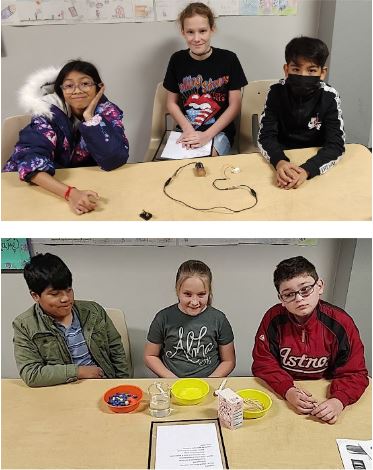
Last school year (2022-23), I collaborated with our 5th grade Science teacher as she focused on the area of Peer Tutoring for her students under Targeted Instruction for Blended/Personalized Learning (Ed Elements, 2018). First, students were exposed to the Science concepts of the unit from a variety of resources such as videos, online text, demonstrations, and student learning experiences. Then, students had to demonstrate their knowledge of the Science concept through writing a reflection in their Science Notebook, answering an open-ended question on the concept orally, or creating their own video response, etc.
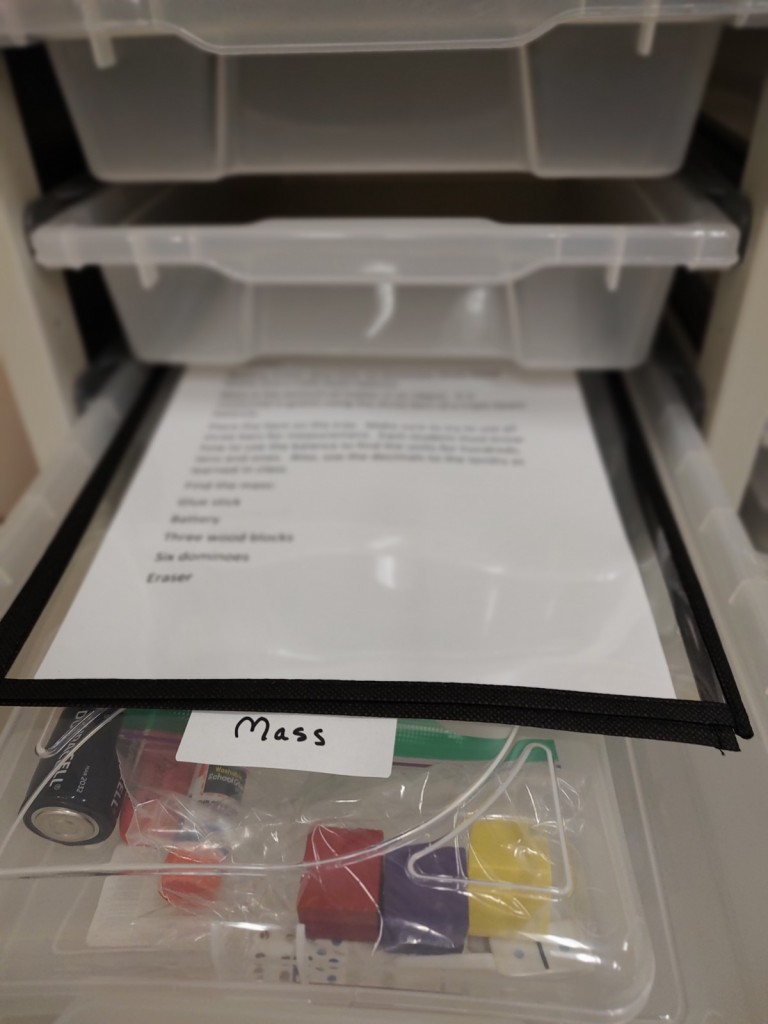
Those students who demonstrated expertise with the concept were chosen as peer tutors for those students who were still struggling with the concept. Students could choose which peer tutor they wanted from a list and could choose the concept based on their personal learning needs. Each student knew their own learning needs based on goal achievement data in their personal goal binder.
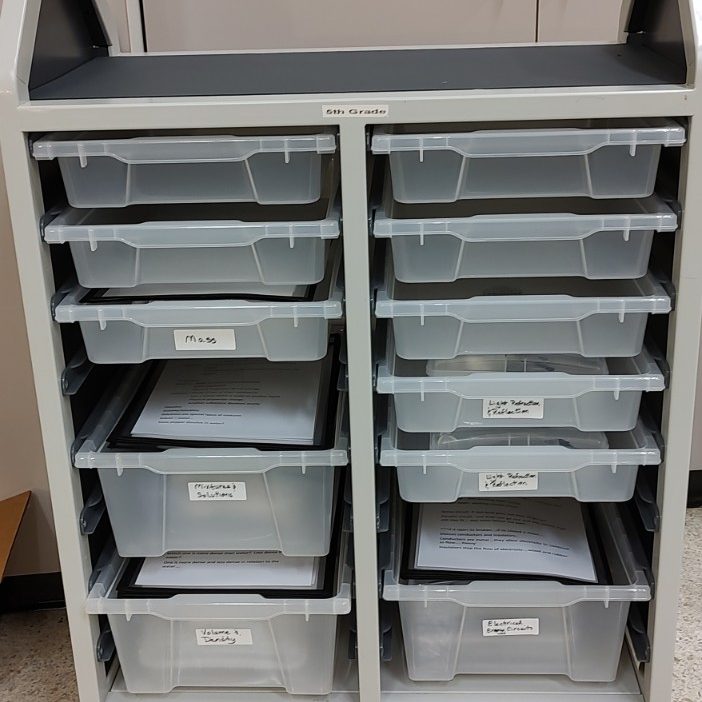
She and I created a cart of station resources for each unit’s Science concepts that peer tutors could utilize with their small groups. These stations in action could also be videoed for review by struggling learners, which is a component in my Innovation Plan for Emergent Bilingual learners, who need this Sheltered Instructional support. Then, there were other small groups of students that took the learning further using their own resources from personal water bottles as rolling objects and books as ramps to create their own peer tutoring videos on concepts such as in this case to demonstrate force and motion. This peer tutoring work is what Thomas and Brown call learning in the “collective environment.” This is also where students are “playing to learn,” and when those extension videos are uploaded for others, they are expanding the learning in the “collective” (Thomas, 2011).
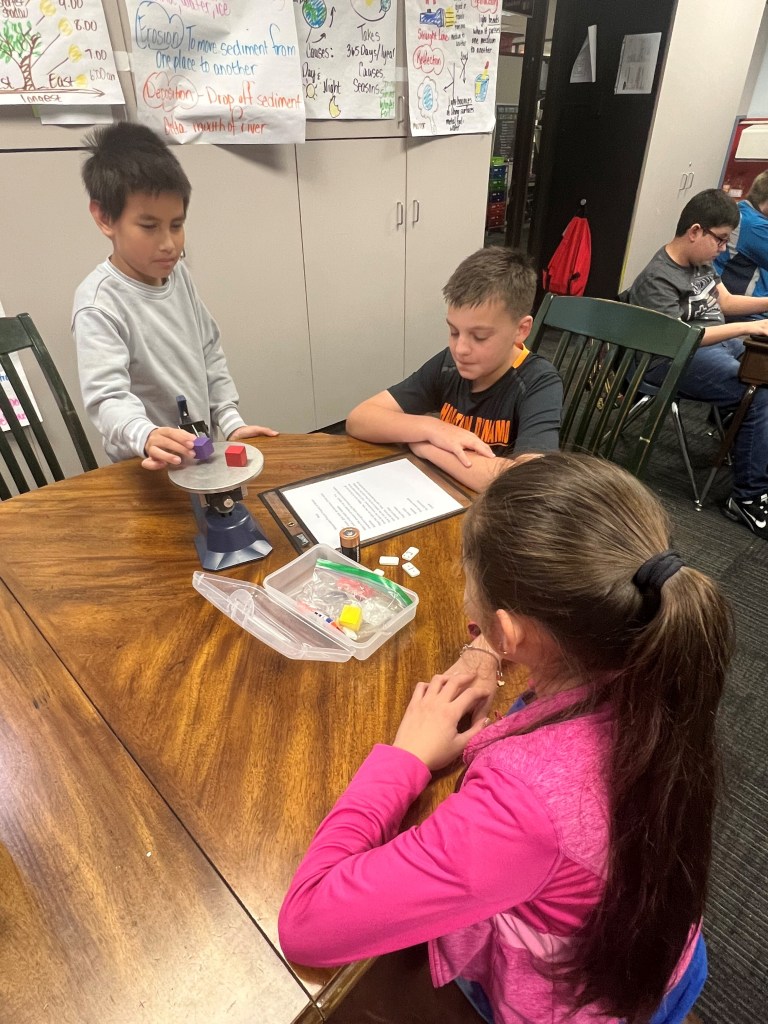
Daniel Pink’s thoughts on motivation add another layer to our work in this 5th Grade Science learning environment where students have “autonomy, mastery, and purpose” regarding their work (Pink, 2010). Thus, it was exciting to see how the students felt empowered in their learning, because they had a choice on what to do based on their learning goals and who would be their tutor. It also was not always the same students who were the peer tutors. Different students would latch on to different Science concepts and master them to become peer tutors throughout the year. As discussed by Dr. Harapnuik, this allowed the teacher to move around the classroom as a coach and mentor to these collaborative groups versus being just a presenter or lecturer with a follow-up assessment (2015).
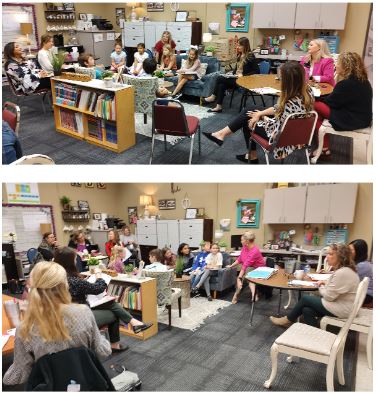
Also, on my campus, I have seen teachers, who were not a part of our campus pilot, collaborating with those teachers in this initiative in order to bring Blended Learning into their own learning environments. We provided coverage for Peer Walk-throughs so these colleagues could visit the classrooms of those teachers in the Blended Learning work and start the transformation process in their own classrooms. Additionally, we had another school district piloting Blended/Personalized Learning take their own Learning Walk-throughs on our campus to see our students in the work. They also had time to visit with a teacher panel and student panel about the impact of this significant learning environment.
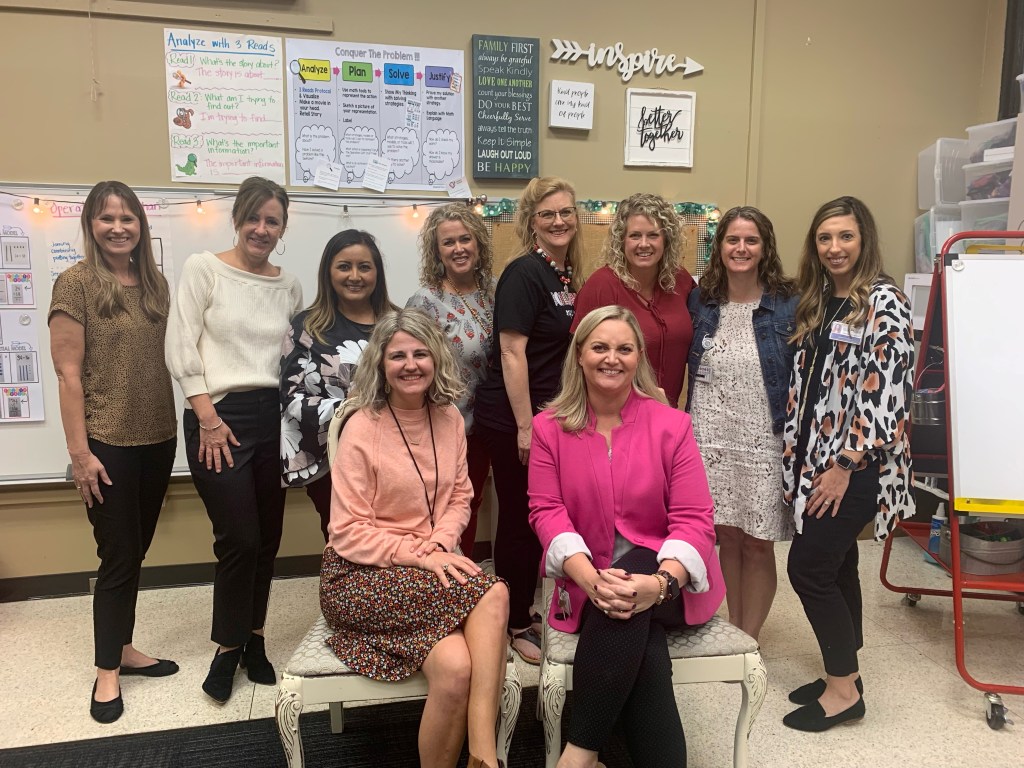
This peer-to-peer learning between the teachers led to campus-wide Student Goal Binders for personal goal setting and reflection as a norm for our campus. We have started using these binders for Student-led Parent conferences where students go through their binder with their parent to discuss what they are doing and learning in school. If a parent cannot attend a conference, the student can be video recorded and the recording sent to the parent to view with the student at home.
My Perspective on CSLE
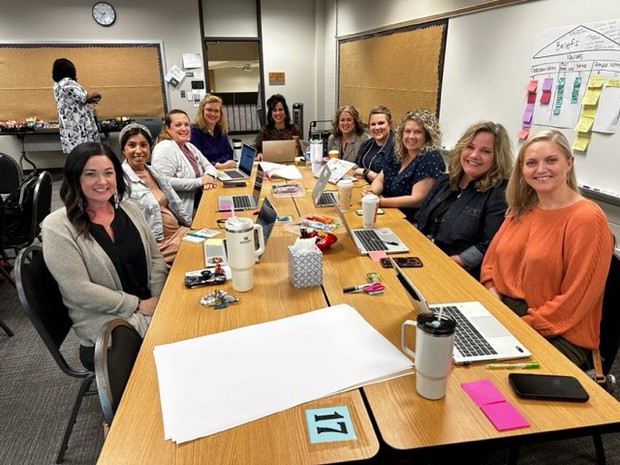
My work in Blended Learning as an Instructional Coach has created a paradigm shift in my learning philosophy. Where I started my career being teacher and curriculum centered, I am now learner-centered. In my work with other campus’ ESL certified teachers that is outlined in my Innovation Plan, I want to incorporate this shift in the culture of learning with a learner-centered focus so that they in turn influence a shift in culture on their campuses. This modeling of success can be replicated for these other campus’ teachers, so they can visualize the work just like my campus’ teachers and outside district visitors have these last two years. My district’s new mission statement this year encompassing “People, Purpose, and Promise” embodies a focus on changing our learning environments to meet the needs of today’s learners, and it is exciting to be a part of this work that supports my Innovation Plan.

References:
Bates, T. (Dec 14, 2015). Building Effective Learning Environments. Retrieved from https://youtu.be/3xD_sLNGurA
Elements, E. (2018). The ultimate personalized learning guide. Education Elements. https://www.edelements.com/personalized-learning
Harapnuik, D. (2015, May 9). Creating Significant Learning Environments (CLSE). Retrieve from https://youtu.be/eZ-c7rz7eT4
Horn, M. B., Staker, H., & Christensen, C. M. (2014). Blended: Using disruptive innovation to improve schools. Wiley.
Pink, Daniel. (April 1, 2010). Drive: The surprising truth about what motivate us. Retrieved from https://youtu.be/u6XAPnuFjJc
Robinson, Ken. (May 24, 2010). Learning revolution. Retrieved from https://youtu.be/r9LelXa3U_I
Thomas, D., & Brown, J. S. (2011). A new culture of learning: Cultivating the imagination for a world of Constant Change. CreateSpace
Thomas, D. (2012, September 12). A New Culture of Learning at TEDxUFM. Retrieved from https://youtu.be/lM80GXlyX0U
 Wings and a Wand